

Why Price Controls Always Backfire
Price control does not eliminate scarcity. It eliminates the information that would have helped everyone respond.

Every government that has tried to override a price signal has discovered the same thing: you can silence the messenger, but you cannot change the message.
When Ed Miliband promised a two-year freeze on energy prices in 2013, the announcement received rapturous applause. Here, at last, was a politician willing to act. The policy seemed obvious: if prices are too high, make it illegal to raise them. Within months, energy companies began raising prices pre-emptively. Investors grew wary of regulatory risk. The freeze was never implemented — but the threat alone was enough to produce the opposite effect.
This is not a story about one bad policy or one unlucky politician. The same sequence — control imposed, consequences inverted, damage done — has repeated across nearly four millennia, from ancient empires to modern democracies. Understanding why it always happens requires understanding what a price actually is. A price is not a number. It is a sentence about scarcity, demand, and trade-offs. And when you silence the sentence, the reality it was describing does not disappear. It simply becomes impossible to read.
This is the second part of a series. You can read Part I — How Prices Actually Work — here.
Silence the Signal, Keep the Scarcity
When a bakery raises the price of bread, that increase carries information: wheat is scarcer, or fuel costs more, or local demand has risen, or the miller switched to organic grain. The specific cause is invisible to the consumer. The signal is not. Bread costs more - adjust accordingly. Consumers buy less, seek substitutes, or accept the higher cost. Producers, seeing the margin, consider expanding. The response is automatic and distributed, requiring no instruction from anyone.
Cap the bread price at two pounds per loaf, and the sentence goes unspoken. The baker cannot signal that wheat is scarce. Consumers receive no information about whether to buy more or less, switch to alternatives, or expect shortages. The knowledge embedded in the rising price vanishes from the market. But the underlying conditions do not vanish with it. Wheat remains scarce. Fuel remains expensive. The flat two-pound price creates a mismatch between the quantity consumers want - more, because it seems cheap - and the quantity producers can profitably supply. The inevitable result is a shortage. Not because the government willed a shortage, but because it suppressed the information that would have prevented one.
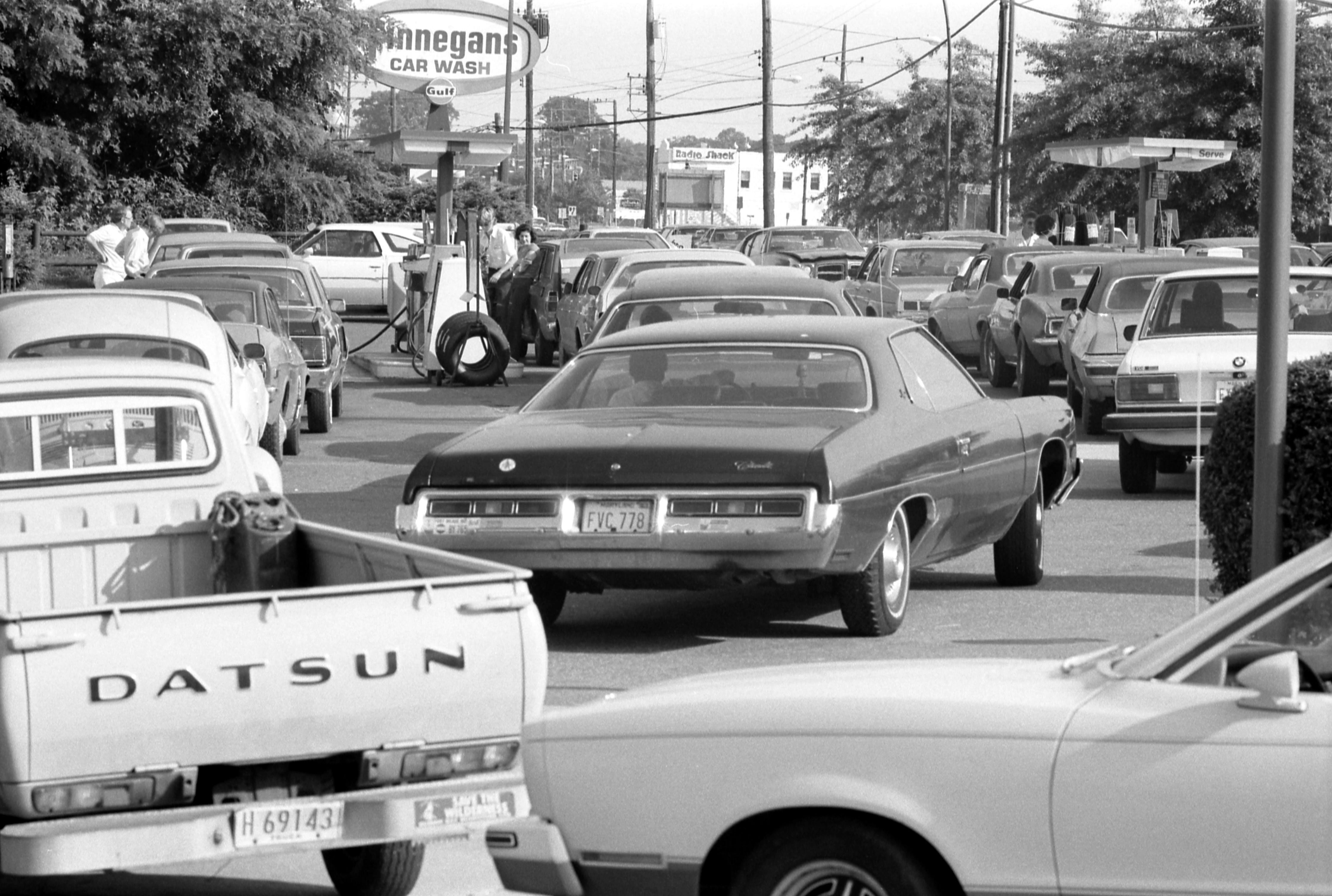
This is not a theory. Nixon’s 1971 price freeze produced gasoline queues and shortages of basic goods within months. Venezuela’s food price controls left supermarket shelves empty while black markets flourished openly. British rent controls, maintained from 1915 to 1989, reduced the private rental sector from 75% of housing stock to 10%. In each case, the control addressed the visible symptom - a price someone considered too high - while guaranteeing that the underlying condition would worsen unseen. You can mandate that landlords charge no more than £800 for a flat, but you cannot mandate that costs be kept low enough to make that rent profitable. You can decree that employers must pay £12 per hour, but you cannot decree that workers worth £8 per hour suddenly become more valuable. The gap between decree and reality gets filled - never in ways policymakers expect.
New York City introduced rent controls in 1943 as a temporary wartime emergency measure. Eight decades later, they remain in force. The city has some of the world’s highest rents and some of its most aggressive rent regulation, and the controls are a significant driver of those distortions. Vacancy rates in rent-stabilised apartments hover around 1%. Tenants hold controlled apartments for decades and pass them to family members. Meanwhile, approximately 40,000 apartments sit vacant because landlords find it more rational to leave them empty than to navigate the controlled market. One of the world’s most expensive cities. Eighty years of temporary emergency measures. Forty thousand empty apartments. The signal has been suppressed for so long that few participants can read what the market is trying to say anymore.
Reality Routes Around the Damage
Suppressing a price does not suppress the economic reality it was reflecting. It redirects that reality into channels the control cannot reach — and those channels almost always exact a higher cost than the original price would have.
Rent control illustrates the mechanism with unusual completeness. A landlord who cannot raise rent can still reduce services. Maintenance gets deferred. Improvements are cancelled. When tenants vacate, the landlord sells, converts to commercial use, or becomes highly selective about new tenants - discriminating in ways that would not arise if market returns made a broader tenant pool attractive. The controlled price remains visible and stable. The deterioration it causes is invisible and slow.
Tenants face perverse incentives of their own. A tenant paying £600 for a flat worth £1,200 at market rates loses £600 monthly by moving. This lock-in prevents job relocation, downsizing when children leave, and upgrading as circumstances improve. Labour mobility falls. Housing misallocation increases. Young families crowd into one-bedroom flats while elderly widows occupy four-bedroom houses, neither able to move without surrendering controlled status and the large implicit subsidy attached to it.
British Rail, under 1970s price controls, is the same story told in steel and concrete. Fares were held below the level needed to fund reinvestment. Passengers paid less at the ticket office and more for delayed journeys, cancelled services, and carriages that rattled because the rolling stock had not been replaced. The controlled price was visible on the board. The disinvestment accumulated in the infrastructure, invisible until the bill became undeniable.
The minimum wage makes the mechanism starker still. Set a wage floor at £10, and employers can still profitably hire workers whose output is worth £15. The worker whose output is worth less than £10 to the employer presents a different calculation: hiring them at £10 guarantees a loss. The rational response is not to hire them. They do not lose a job they had. They never get offered one. The control appears to have raised the floor. What it has actually done is remove the bottom rungs of the ladder — the entry-level positions where people without experience or credentials acquire both.
Each of these substitutions seems individually rational. The landlord who stops repainting is not malicious - he is responding to the incentives the control created. The tenant who refuses a job in another city is not irrational - she is protecting a subsidy she cannot replace. The employer who automates rather than hires is not cruel - he is adapting to a wage floor that makes certain labour unprofitable. Collectively, these rational responses are destructive. The price control has not eliminated the underlying scarcity or the trade-offs it imposes. It has merely redirected behaviour into channels that bypass the control, while generating a greater social cost than the original price would have imposed.
One Intervention Demands the Next
Because price controls address symptoms rather than causes, the underlying problem persists - and a persisting problem generates pressure for additional intervention.
Energy prices rise due to genuine scarcity: insufficient generation capacity or costly regulations. Capping retail prices does nothing to address the shortage. It prevents the price signal that would have encouraged new supply or reduced demand. The shortage continues. Politicians face pressure to act again.
The British energy market illustrates the sequence with uncomfortable fidelity. Price caps reduced profits. Regulators worried about underinvestment and mandated simpler tariffs. Companies stopped offering innovative products. Regulators banned specific discounts. Consumer switching fell. Each intervention was a rational response to the problem created by the previous one. The regulatory apparatus grew more complex and more intrusive at each step, yet the original problem - energy too expensive for some households - remained unresolved.
This cascading is not specific to energy. Rent controls generate rent control boards, means testing, elaborate rules governing permitted increases, and enforcement bureaucracies. Minimum wages generate youth sub-minimum wages, regional variations, exemptions, and government training programmes. University tuition caps generate quality controls, access requirements, subsidies, and directed investment. Each complication creates new opportunities for gaming, new unintended consequences, and new demands for further regulation. The controls do not end. They metastasise.
The Victims Who Never March
If price controls consistently produce these outcomes, the question that demands an answer is not economic but political: why do they persist? The answer lies in an asymmetry so stark that, once seen, it explains almost everything about the longevity of failed policy.
The winners of a price control are readily identifiable. The tenant paying below-market rent knows exactly what she gains and will fight to keep it. The worker earning above the minimum wage floor knows precisely what it means to him. These people are organised, vocal, and politically present.
The losers are invisible. The prospective tenant who cannot find housing because the controlled rent makes letting unprofitable does not know she is a victim of rent control - she attributes her situation to a housing shortage, full stop. The prospective worker whose productivity does not justify the minimum wage does not know he is unemployed because of a policy - he attributes it to bad luck, or the economy, or the employer. Neither will march. Neither will lobby. Neither will write to their MP. They do not know what they have lost because the transaction never happened.
Public choice economists describe this dynamic as concentrated benefits and dispersed costs: the beneficiaries of intervention are visible, organised, and motivated, while those who bear the costs are numerous, fragmented, and often unaware they are paying them.
The true cost of a price control is always borne by people who never know they are paying it.
Propose removing rent controls, and current tenants protest vociferously. Prospective tenants would not march in support - they do not know they are being harmed. The government observes organised opposition to reform and no organised support. The rational choice, from the politician’s position, is to leave the controls in place. This is why British rent controls persisted for seventy-four years despite destroying the private rental market. This is why New York’s temporary wartime emergency has outlasted every war fought since it was introduced. This is why American agricultural price supports have continued for eight decades, creating surpluses and enriching wealthy landowners, with no sufficient political force to end them.
Once a control creates a constituency, removal requires a politician willing to be seen as taking something from people who know they have it and giving something to people who do not yet know they need it. That politician is rare. The controls, accordingly, are permanent.
Diocletian’s Edict on Maximum Prices, issued in 301 AD, fixed the prices of over a thousand goods and decreed death for anyone who charged more. Within years, goods had disappeared from markets, traders had fled to regions beyond Roman reach, and the edict was quietly abandoned. Seventeen hundred years later, Ed Miliband stood in a conference hall and proposed a two-year energy price freeze. The contexts are incomparably different.
The result was the same.
What this repetition suggests is not that politicians are foolish or that voters are naïve. It suggests something more uncomfortable: that the appeal of price controls is not really economic at all. It is moral. When prices rise, someone appears to be charging too much. The control feels like justice - a correction of an injustice, a statement that some things should not cost what the market says they cost. The economic consequences are an abstraction. The injustice is visible and immediate.
This is why the lesson does not get learned. It is not a lesson about economics. It is a conflict between two different ways of seeing a price - as a verdict that can be appealed, or as an observation about reality that cannot. Price controls are the political expression of the first view. Every economy that has tried them has eventually been forced to accept the second.
The question is only how much damage accumulates in the interval.
If the true cost of a price control is borne by people who never know they are paying it, what would it take to make that cost visible? And would it change anything if it were?
Thanks for reading! Let me know your thoughts in the comments. — Attila
If you enjoyed this, explore more articles and ideas on my blog here.
Disclaimer
The views and opinions expressed on this website are for educational and informational purposes only, and should not be considered as investment advice. The author may hold positions in the stocks mentioned on this website. The author of this website is not a licensed stockbroker or financial advisor. Nothing contained herein should be construed as a recommendation to buy, hold, or sell any securities or financial products. Always seek the advice of a financial advisor and do your own independent research before making any trade or investment decisions.
We do not guarantee the accuracy or completeness of any information on this website. Such information is provided “as is” without warranty or condition of any kind, either express or implied. Past performance may not be indicative of future results. This website could include inaccuracies or typographical errors.
We are not liable or responsible for any damages incurred whatsoever from actions taken from information provided on this website, including financial losses. Since all readers who access any information on this website are doing so voluntarily and of their own accord, any outcome of such access is understood to be their sole responsibility. In no event shall we be liable to any person for any decision made or action taken in reliance upon the information provided herein.
This content is published by a private individual who is not a regulated investment firm, investment adviser, or financial intermediary under MiFID II or any applicable EU or Hungarian financial services legislation. This publication does not constitute a financial promotion, investment research, or a personal recommendation within the meaning of applicable law. References to specific financial instruments, funds, or companies are for illustrative and informational purposes only and do not constitute a solicitation or offer to buy or sell any security or financial product. European investors should be aware that certain financial products referenced in this content may not be available for direct purchase in their jurisdiction due to applicable regulations, including MiFID II PRIIPS requirements, and should consult a regulated financial adviser before acting on any information contained herein.
Explaining the things you did in this essay is always a good thing. People need the answers to these questions that actually fit reality, not just the promises of the dishonest or totally naïve politicians.